Author: Harshita Swami ( LLM qualified Guwahati University, GSET qualified)
Environmental protection is become a constitutional issue in India due to climate change. Despite the lack of explicit recognition of a right to a healthy environment in the Constitution, judicial interpretation of Articles 21, 48A, and 51A(g) has established environmental constitutionalism as a crucial framework for climate policy. This article highlights the judiciary’s role in promoting sustainable development, environmental justice, and governmental accountability while examining the constitutional underpinnings, significant court rulings, and difficulties associated with climate action.
Keywords: Environment Protection, Right to Healthy Environment, Judicial interpretation, Article 21, Article 48 A, Article 51 A(g), Sustainable Development.
INTRODUCTION:
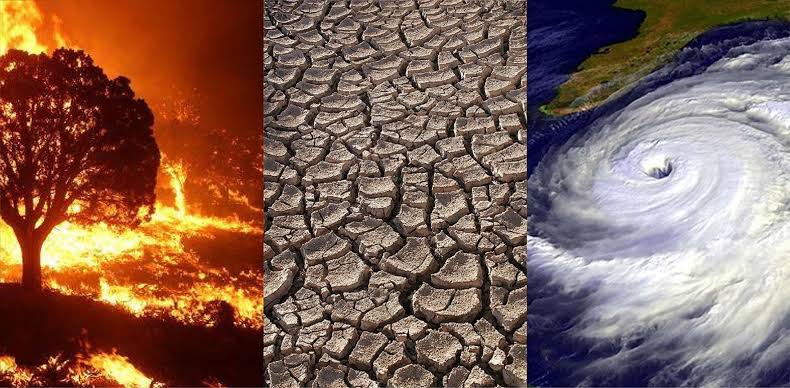
Climate change has emerged as one of the most significant legal and constitutional concerns of the twenty-first century. [1]Rising global temperatures, extreme weather events, biodiversity loss, air pollution, and water scarcity have far-reaching consequences for human rights and sustainable development[2]. Climate change in India has exacerbated floods, droughts, heat waves, glacial melting, and coastline erosion, disproportionately affecting economically disadvantaged and vulnerable populations. [3]India’s Constitution, adopted in 1950, did not officially recognise environmental preservation as a basic right. [4]However, environmental concerns gained constitutional significance over time as a result of legislative initiatives, constitutional amendments, and judicial interpretations[5]. The Forty-Second Constitutional Amendment Act of 1976 established Article 48A under the Directive Principles of State Policy, requiring the state to maintain and enhance the environment, as well as Article 51A(g), which imposes a fundamental duty on citizens to protect natural resources.[6]
The Supreme Court of India has made the most significant contribution to environmental constitutionalism by expanding the meaning of Article 21. Beginning in the 1980s, the Court acknowledged that the right to life includes the right to live in a pollution-free and healthy environment. [7]As a result, environmental preservation has become an enforceable constitutional provision, notwithstanding the lack of formal constitutional recognition.
Environmental constitutionalism is the application of environmental ideals and ecological sustainability to constitutional legislation, governance, and judicial decision-making. It assures that environmental conservation is more than just a policy goal, but a constitutional requirement enforceable through judicial scrutiny.[8]
This study investigates how Indian constitutional law has evolved to confront climate change via fundamental rights. It reviews constitutional provisions, major judicial decisions, environmental ideals, and contemporary difficulties, as well as the future trajectory of climate constitutionalism in India.
Environmental constitutionalism is the incorporation of environmental protection into constitutional law via explicit constitutional provisions or judicial interpretation. It recognises environmental conservation as critical to achieving human dignity, public health, and sustainable development. The 1972 Stockholm Declaration[9], the 1992 Rio Declaration[10], the Paris Agreement,[11] and the United Nations declaration of the right to a clean, healthy, and sustainable environment have all contributed to the rise of environmental constitutionalism around the world. Constitutional environmental rights increase accountability by allowing courts to scrutinise governmental activities that harm ecological sustainability.[12]
The primary goals of environmental constitutionalism include:
Ø Protecting core environmental rights.
Ø Promoting sustainable development.
Ø Conservation of biodiversity.
Ø Climate resiliency and adaptation.
Ø Accountability of public authority.
Ø Future generations are protected.
India illustrates judicial environmental constitutionalism because constitutional environmental rights were developed primarily through judicial interpretation rather than constitutional change. India illustrates judicial environmental constitutionalism because constitutional environmental rights were developed primarily through judicial interpretation rather than constitutional change.[13]
CONSTITUTIONAL FRAMEWORK FOR ENVIRONMENTAL PROTECTION.
Although environmental protection was not originally included in the Constitution, a number of constitutional clauses together form India’s environmental governance framework. Article 21:
RIGHT TO LIFE:
Article 21 states that no person may be deprived of life or personal liberty unless in accordance with legal procedures. [14]The Supreme Court interpreted “life” to include:
Right to Clean Air[15]
Right to clean drinking water.[16]
Right to a Pollution-Free Environment
Right to ecological balance.[17]
Right to public health.
Right to livelihood[18]
The environmental dimension of Article 21 serves as the constitutional foundation for climate litigation in India.
Article 48A
Article 48A:
Article 48A states:
“The State shall endeavour to protect and improve the environment and to safeguard the forests and wildlife of the country.[19] While not justiciable, this article provides guidance for legislative policy and judicial interpretation
Article 51A (g)
Every citizen has a fundamental duty:
“To protect and improve the natural environment including forests, lakes, rivers and wildlife and to have compassion for living creatures.” This paragraph emphasises that environmental conservation is a shared constitutional responsibility.[20]
Articles 14 & 19
Environmental deterioration might also violate:
Article 14 authorises arbitrary environmental choices.[21] Article 19(1)(g) balances commerce and business with environmental constraints outlined in Article 19(6). Thus, environmental governance reflects a balance between rights and acceptable constraints.[22]
Judicial Development of Environmental Constitutionalism
The Indian judiciary has greatly enhanced constitutional environmental protection through Public Interest Litigation (PIL).
§ Rural Litigation and Entitlement. Kendra vs. State of Uttar Pradesh [23]
The Supreme Court has ruled that environmentally hazardous limestone mining operations in the Doon Valley be terminated. It emphasised that ecological preservation trumps solely business objectives.
§ M.C. Mehta v. Union of India (Oleum Gas Leak Case [24])
The concept of absolute liability, which holds dangerous businesses fully responsible for any harm brought on by unsafe behaviour, was introduced by the Court. Environmental accountability was enhanced by this
§ Vellore Citizens Welfare Forum vs. Union of India (1996)[25]
The Supreme Court acknowledged the concepts of: Sustainable development: Polluter Pays Principle and Precautionary Principle. These notions become part of Indian environmental law and constitutional jurisprudence.
§ M. C. Mehta v. Kamal Nath (1997) [26]
The Court adopted the Public Trust Doctrine, stating that natural resources such as rivers, woods, and lakes are held by the state in trust for the public and cannot be used only for private interests.
§ T.N. Godavarman Thirumulpad vs. Union of India[27]
This landmark forest conservation case increased judicial control of forest governance and biodiversity conservation
CLIMATE GOVERNANCE IN INDIA :
India has taken a multifaceted approach to climate policy, using constitutional principles, legislation, administrative initiatives, and international obligations. Although the country lacks comprehensive climate change legislation, a number of laws and policy measures help to mitigate and adapt to climate change. The Environment (Protection) Act of 1986 governs environmental control in India. It authorises the central government to take action to safeguard and improve environmental quality. Other significant legislation includes the Air (Prevention and Control of Pollution) Act of 1981, the Water (Prevention and Control of Pollution) Act of 1974, the Forest (Conservation) Act of 1980, the Biological Diversity Act of 2002, and the Energy Conservation Act of 2001.[28]
At the policy level, the Indian government launched the National Action Plan on Climate Change (NAPCC) in 2008. The NAPCC is made up of eight national missions: the National Solar Mission, National Mission for Enhanced Energy Efficiency, National Mission on Sustainable Habitat, National Water Mission, National Mission for Sustaining the Himalayan Ecosystem, Green India Mission, National Mission for Sustainable Agriculture, and National Mission on Strategic Knowledge for Climate Change. These missions seek to include climate issues into development planning while encouraging sustainable growth.[29]
India is also a signatory to the UN Framework Convention on Climate Change (UNFCCC), the Kyoto Protocol, and the Paris Agreement. Under the Paris Agreement, India filed its Nationally Determined Contributions (NDCs), agreeing to reduce its GDP’s carbon intensity, raise the share of non-fossil fuel-based electricity generation, and expand forest and tree cover. These commitments reflect India’s determination to strike a balance between economic development and environmental preservation.[30]
The constitutional values included in Articles 21, 48A, and 51A(g) serve as the normative underpinning for climate governance. Courts have increasingly relied on these clauses to determine that government programs comply with constitutional commitments to safeguard the environment[31]
CHALLENGES IN ADDRESSING CLIMATE CHANGE THROUGH CONSTITUTIONAL RIGHTS :
Despite significant judicial innovation, several challenges continue to hinder effective implementation of environmental constitutionalism in India. First, India lacks a comprehensive climate change legislation that clearly defines governmental responsibilities, emission reduction targets, adaptation measures, and enforcement mechanisms. Existing environmental laws were enacted before climate change emerged as a global legal concern and therefore do not adequately address contemporary climate challenges.[32] Second, implementation of environmental laws remains inconsistent due to weak institutional capacity, inadequate monitoring, delays in environmental clearances, and poor coordination among regulatory authorities. Third, fast industrialisation, urbanisation, and infrastructural expansion frequently result in tensions between economic growth and environmental protection. Environmental clearances are frequently granted for development projects despite serious ecological concerns, resulting in deforestation, habitat destruction, and increased carbon emissions. Fourth, climate litigation in India is still very underdeveloped when compared to other jurisdictions. Although constitutional remedies exist, courts frequently exhibit judicial caution in cases involving difficult policy judgements. Fifth, citizens’ environmental knowledge remains low, impeding public participation in climate governance. Environmental constitutionalism needs active participation from civil society, educational institutions, and local communities.[33]
Finally, climate change raises transnational issues that cannot be addressed only through domestic constitutional systems. International cooperation, technological transfer, climate funding, and global policy coordination remain critical for effective climate action.[34]
Conclusion
From the above discussion, it can be concluded that environmental constitutionalism has greatly boosted India’s approach to environmental preservation by broadening the scope of Article 21 and supporting the constitutional values reflected in Articles 48A and 51A(g). Judicial interpretation has identified a clean and healthy environment as an essential component of the right to life, establishing the groundwork for effective climate regulation. However, constitutional principles are insufficient to handle the escalating climate issue. Effective climate action necessitates comprehensive law, robust enforcement mechanisms, long-term policymaking, and active public participation. By combining constitutional values and environmental governance, India can better safeguard ecological balance, uphold climate justice, and secure a sustainable future for current and future generations.
[1] Intergovernmental Panel on Climate Change (IPCC), Climate Change 2023: Synthesis Report (IPCC 2023).
[2] United Nations Environment Programme, Emissions Gap Report 2023 (UNEP 2023)
[3] Ministry of Environment, Forest and Climate Change, India: Third National Communication to the UNFCCC (Government of India 2023).
[4] Constitution of India 1950.
[5] Shyam Divan and Armin Rosencranz, Environmental Law and Policy in India (3rd edn, Oxford University Press 2019).
[6] Constitution (Forty-second Amendment) Act 1976
[7] Subhash Kumar v State of Bihar (1991) 1 SCC 598.
[8] Virender Gaur v State of Haryana (1995) 2 SCC 577.
[9] Declaration of the United Nations Conference on the Human Environment (Stockholm Declaration) (1972).
[10] Rio Declaration on Environment and Development (1992).
[11] Paris Agreement (adopted 12 December 2015, entered into force 4 November 2016)
[12] Louis J Kotzé, Global Environmental Constitutionalism in the Anthropocene (Hart Publishing 2016)
[13] James R May and Erin Daly, Global Environmental Constitutionalism (Cambridge University Press 2015).
[14] Constitution of India 1950, art 21.
[15] Subhash Kumar v State of Bihar (1991) 1 SCC 598.
[16] AP Pollution Control Board v MV Nayudu (1999) 2 SCC 718.
[17] Virender Gaur v State of Haryana (1995) 2 SCC 577.
[18] Olga Tellis v Bombay Municipal Corporation (1985) 3 SCC 545.
[19] Constitution of India 1950, art 48A.
[20] M P Jain, Indian Constitutional Law (8th edn, LexisNexis 2018).
[21] Constitution of India 1950, art 14.
[22] Constitution of India 1950, arts 19(1)(g) and 19(6).
[23] Rural Litigation and Entitlement Kendra v State of Uttar Pradesh 1985 Supp SCC 79.
[24] M C Mehta v Union of India (Oleum Gas Leak Case) (1987) 1 SCC 395.
[25] Vellore Citizens’ Welfare Forum v Union of India (1996) 5 SCC 647.
[26] M C Mehta v Kamal Nath (1997) 1 SCC 388.
[27] T N Godavarman Thirumulpad v Union of India (1997) 2 SCC 267.
[28] Environment (Protection) Act 1986; Air (Prevention and Control of Pollution) Act 1981; Water (Prevention and Control of Pollution) Act 1974; Forest (Conservation) Act 1980; Biological Diversity Act 2002; Energy Conservation Act 2001.
[29] Environment (Protection) Act 1986; Air (Prevention and Control of Pollution) Act 1981; Water (Prevention and Control of Pollution) Act 1974; Forest (Conservation) Act 1980; Biological Diversity Act 2002; Energy Conservation Act 2001
[30] Government of India, National Action Plan on Climate Change (Prime Minister’s Council on Climate Change 2008).
[31] Constitution of India arts 21, 48A, 51A(g); Subhash Kumar v State of Bihar (1991) 1 SCC 598.
[32] Navroz K Dubash, India in a Warming World: Integrating Climate Change and Development (OUP 2019).
[33] Shibani Ghosh, ‘Environmental Rule of Law in India’ (Centre for Policy Research 2020).
[34] Constitution of India art 51A(g); Biological Diversity Act 2002.
Paris Agreement (n 7); UN Framework Convention on Climate Change (n 7).