Arshita Sharma is an Assistant Professor and a Ph.D. Scholar in Law. She is UGC- NET qualified and holds a strong academic interest in emerging contemporary legal issues, public policy, and socio-legal research. Her work primarily focuses on evolving legal challenges and interdisciplinary approaches within the legal framework.
Introduction
A recent article published in The Hindu on 5th April 2026 titled“Lost in the Glow: Navigating the Crisis of Light and Wildlife” specifically highlighted South Asia’s rapid surge in night-time brightness due to infrastructure expansion, contrasted against Europe’s intentional dimming trends. The article highlights how excessive illumination disrupts wildlife movement, migration patterns, and natural ecosystems, particularly affecting nocturnal species. However, it has already been established through various studies that the implications of light pollution extend far beyond wildlife alone. Continuous exposure to artificial light has increasingly emerged as a serious threat to human health, affecting sleep cycles, mental well-being, hormonal balance, and overall psychological functioning. In an age where development is increasingly associated with uninterrupted brightness, the environmental and health consequences of excessive artificial lighting can no longer remain ignored.
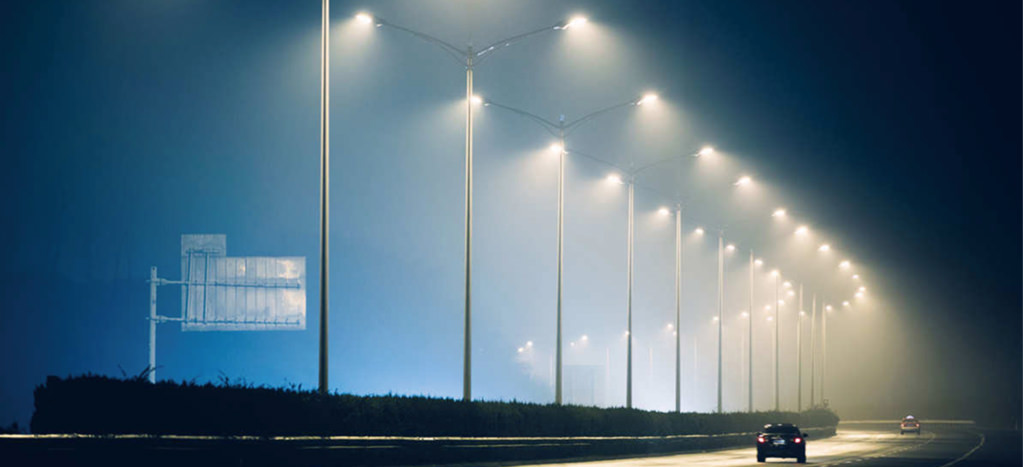
For centuries, sunset symbolized rest, biological recovery, and harmony with nature’s circadian rhythms but the modern world rarely sleeps. As cities expand and technology advances, artificial light has transformed night into an extension of day. Streets glow, buildings shimmer, and skylines radiate with uninterrupted brightness. While this illumination symbolizes progress and development, it conceals an often-ignored environmental cost light pollution (Stone, 2017). Unlike air or water pollution, light pollution is invisible in its harm yet profound in its consequences. It not only disrupts ecological systems but also deeply affects human psychology and behavior (Kaushik, Nair et. al, 2022). The study’s core data showed that a massive majority of Indian respondents had never even heard the term ‘light pollution’ before. Mentioning this directly supports your point. Despite its growing impact, legal systems have struggled to regulate it effectively, largely because its harm is gradual, intangible, and intertwined with human perception. Understanding light pollution, therefore, requires an interdisciplinary approach that combines legal frameworks with psychological insights.
Understanding Light Pollution as an Environmental Concern
Light pollution refers to excessive, misdirected, or intrusive artificial light (P Caraveo, 2021). It manifests in forms such as skyglow, glare, and light trespass, each contributing to the erosion of natural darkness. Urban areas, in particular, experience intense skyglow, making it nearly impossible to observe the night sky. While artificial lighting serves essential purposes security, transportation, and economic activity its overuse reflects a lack of regulation and awareness (Rajkhowa, 2014). From a legal point, light pollution remains under-recognized. Environmental governance frameworks tend to focus on tangible pollutants, leaving artificial light largely unregulated. This gap reveals a fundamental limitation in traditional environmental law, which often responds to visible and measurable harms rather than experiential and psychological ones.
Psychological Impact: Disruption of Circadian Rhythms
One of the most significant psychological effects of light pollution is the disruption of circadian rhythms the body’s internal clock that regulates sleep and wake cycles (Hassan, 2024) . Exposure to artificial light at night suppresses melatonin production, a hormone critical for sleep (Arista, Chakraborty, et.al., 2020). Blue-rich LED lighting leads to sleep disorders, fatigue, and long-term mental health consequences (Chepesiuk 2009). When cities switched to white LEDs to save energy, they inadvertently introduced the exact wavelength that is most aggressive at suppressing melatonin and disrupting Research in environmental psychology indicates that chronic sleep disruption is linked to anxiety, depression, and reduced cognitive performance. The human brain is biologically conditioned to respond to natural light-dark cycles. When these cycles are altered, it creates a state of physiological and psychological imbalance (Menculini, Cirimbilli, et.al, 2020). Over time, individuals exposed to high levels of night-time lighting may experience heightened stress levels, irritability, and emotional instability.
Cognitive Biases and the Normalization of Brightness
A key psychological dimension of light pollution lies in how individuals perceive artificial light. Brightly lit environments are often associated with safety, prosperity, and modernity. This perception reflects a cognitive bias where individuals equate illumination with security, even when excessive lighting may not significantly reduce crime. This phenomenon can be understood through behavioural studies showing that people tend to favour immediate, visible benefits over long-term risks. Similar to findings in energy consumption research, where increased efficiency leads to higher usage (a rebound effect), the widespread availability of artificial lighting encourages overconsumption (Gillingham, 2016). Individuals and institutions continue to increase lighting intensity without recognizing its environmental and psychological costs. Such behavioural patterns highlight the limitation of purely regulatory approaches. Laws may restrict usage, but unless underlying perceptions are addressed, compliance remains superficial.
Sensory Overload and Urban Mental Health
Urban environments already subject individuals to continuous sensory stimulation noise, traffic, digital screens, and crowds. Light pollution adds another layer to this overload. Constant exposure to artificial brightness deprives individuals of darkness, which is essential for psychological rest. Environmental psychology studies suggest that darkness plays a restorative role, allowing the brain to recover from daily cognitive stress. The absence of natural night conditions leads to what can be described as “perpetual alertness,” where the mind remains in a semi-active state even during rest periods. This contributes to burnout, reduced attention span, and declining mental well-being. Moreover, the inability to experience natural darkness disconnects individuals from nature. Research has consistently shown that interaction with natural environments improves mental health. The loss of dark skies, therefore, represents not just an environmental issue but also a psychological deprivation.
Legal Frameworks and Their Limitations
Unlike noise, which has strict decibel limits codified under the Noise Pollution Rules, 2000, light pollution has no legal threshold values in India leaving the NGT with no standards to enforce. However, it can be indirectly regulated under the Environment (Protection) Act, 1986, which empowers authorities to take measures for environmental protection. Additionally, the right to a healthy environment has been interpreted as part of the right to life under Article 21 of the Constitution of India. Despite these provisions, enforcement remains weak due to the absence of specific standards and measurable thresholds for artificial lighting. Unlike noise or air pollution, light pollution lacks clearly defined limits, making it difficult to regulate effectively. The National Green Tribunal, while empowered to address environmental harm, has limited scope in dealing with issues that are not explicitly codified. Panchtatva Foundation v. Ministry of Environment, Forest and Climate Change & Ors (NGT, Dec 2024) reflects a broader challenge in environmental law addressing harms that are diffuse, gradual, and psychologically mediated. Light pollution does not produce immediate, visible damage, making it less likely to attract legal attention despite its long-term consequences.
Behavioural Insights and the Need for Regulatory Innovation
Addressing light pollution requires more than traditional legal enforcement; it demands behavioural change. Psychological research emphasizes the role of “nudges” subtle interventions that guide individuals towards desirable behavior without coercion. For instance, motion-sensor lighting, automatic dimming systems, and the use of warmer light tones can significantly reduce unnecessary illumination (Balafoutis & Skandali et. al, 2025). Public awareness campaigns can also play a crucial role in reshaping perceptions. When individuals understand the psychological and health impacts of excessive lighting, they are more likely to adopt sustainable practices. Behavioural interventions, combined with legal regulation, can create a more effective approach to environmental governance. Urban planning must also incorporate sustainable lighting design. This includes directing light downward, minimizing glare, and limiting illumination during late-night hours. Such measures not only reduce environmental harm but also align with psychological well-being (Wang & Zou et. al, 2025).
Conclusion
Light pollution represents a unique environmental challenge one that is not immediately visible yet deeply impactful. Its effects extend beyond ecological disruption to influence human psychology, behavior, and overall well-being. The failure of legal systems to adequately regulate light pollution underscores the need for an interdisciplinary approach that integrates law with psychological insights. As societies continue to advance technologically, the preservation of natural darkness must be recognized as a fundamental aspect of environmental and mental health. Effective regulation of light pollution will require not only legal reforms but also a shift in human perception and behavior. Only by understanding the psychological dimensions of this issue can law truly fulfil its role in creating a sustainable and balanced environment.
REFRENCES:
1. Balafoutis, T., Skandali, C., et al. (2025). Light pollution beyond the visible: Insights from people’s perspectives. Urban Science, 9.
2. Chepesiuk, R. (2009). Missing the dark: Health effects of light pollution. Environmental Health Perspectives, 116.
3. Davies, T. W., Duffy, J. P., et al. (2014). The nature, extent, and ecological implications of marine light pollution. Frontiers in Ecology and the Environment, 12.
4. Kaushik, K., Nair, S., et al. (2022). Studying light pollution as an emerging environmental concern in India. Journal of Urban Management, 11.
5. Kandadai, S., & Das, D. (2022). Illuminating the path to sustainable skies: A study on light pollution and environmental impacts. HPNLU Law Journal, 3.
6. Lamphar, H., Kocifaj, M., et al. (2021). Light pollution as a factor in breast and prostate cancer. Science of the Total Environment, 806.
7. Nguyen, T. A., Gupta, R. K., et al. (2024). Nanotechnology for light pollution reduction. CRC Press.
8. Rajkhowa, R. (2014). Light pollution and impact of light pollution. International Journal of Science and Research, 3.
9. Shahidha, P. A., & Dinesh, G. K., et al. (2025). Light pollution causes and effects in the Anthropocene: Impacts on ecosystems and human health A narrative review. Cornous Environmental Sciences, 2.
10. Stone, T. (2017). Light pollution: A case study in framing an environmental problem. Ethics, Policy & Environment, 11.
11. Wang, L.-B., Zou, H.-X., et al. (2025). Reducing artificial light at night exposure in the urban environment could decrease light pollution-related hypertension in children. Hypertension Research, 48