This article has been authored by Shreya Tripathi who is a second-year B.A., LL.B. (Hons.) student at IILM University, Greater Noida. Her academic interests centre on constitutional law, with a growing inclination toward issues at the intersection of rights, governance, and contemporary legal challenges. She has gained practical exposure to the legal system through her internship experience with a law firm, where she engaged with varied aspects of legal research and drafting. Additionally, her visits to courts have provided her with valuable insight into courtroom procedure and the functioning of the judicial process, further strengthening her interest in litigation and public law.
Introduction
In the current digital age, India finds itself in a familiar cycle. A single remark, whether a political opinion, satirical joke, or casual comment, can reach millions within minutes through social media platforms. A clip often stripped of context circulates online. Within hours, outrage hardens into a demand for legal action. FIRs follow up. Debate explodes. From backlash against comedians like Samay Raina to controversies surrounding speeches attributed to Himanta Biswa Sarma, a pattern has emerged: public outrage quickly transforms into legal action. This raises a fundamental question: Is Indian law unclear on free speech and hate speech or are we applying it inconsistently?
This blog examines that India is not a land of constitutional incoherence on free speech: it has a structural problem where no one is consistently following the rules, leading to a chilling effect, especially when it comes to online speech. And the so-called classical “incitement” standard of behaviour, while doctrinally sound, is more and more stressed by the pace, magnitude, and structure of online communication.
Constitution Framework: Freedom and its limits
The Constitution guarantees freedom of speech under Article 19(1)(a), but it also allows the State to restrict it under Article 19(2)[1]. That part is well known. The real question is how courts have interpreted the balance. Since Romesh Thappar v. State of Madras[2], the Supreme Court has made clear that free speech is essential for democracy. The Court developed this idea over time, and the most clear-cut conclusion to it is derived from Shreya Singhal v. Union of India[3]. In that case, the Court made a very stark distinction: speech can be curtailed only when it constitutes incitement. Not when it is annoying. Not when it is offensive. Not when it hurts sentiments. Only when it creates a real risk of harm.[4] This is important because it indicates that Indian law is not as vague as people believe. At least at the constitutional level, the standard is fairly clear.
Judicial Evolution: State Deference to Speech-Protection Standards
India’s constitutional legislation about free speech is not so nebulous as usually presumed. The Supreme Court’s interpretative journey on this issue represents a massive and more developed doctrinal evolution. India’s Supreme Court had a precedent long in opposition to a restrictive language state authority in Ramji Lal Modi v. State of Uttar Pradesh (1957)[5], with the Court leaning heavily toward state opinion. Restrictions by the state on speech considered to be likely to disturb public order were enforced without any substantial or proximate evidence to suggest they might endanger the public interest, and so a wider government overreach in control of expression was permissible. We began to take a striking break with this position in S. Rangarajan v. P. Jagjivan Ram (1989)[6], when the Court markedly diminished the threshold. It determined that curtailing speech involves more than speculative anxiety, or merely a general fear of unrest, the harm had to be immediate and severe. Possible, but not proximate, certainly was not an adequate pretext for censorship.
The jurisprudential trajectory culminated in the landmark ruling of Shreya Singhal v. Union of India (2015)[7], where the Supreme Court struck down Section 66A of the Information Technology Act, 2000[8] Due to its vagueness and excessive breadth. Importantly, the Court established a three-tier framework:
1. Discussion – fully protected
2. Advocacy – fully protected
3. Incitement – subject to restriction
By limiting the scope of state intervention solely to incitement, the Supreme Court has successfully aligned Indian Free Speech jurisprudence with internationally established standards on the limit of expressive freedom.
The Problem of Hate Speech: Fragmentation Without Definition
Despite constitutional clarity on free speech, Indian law does not provide a precise statutory definition of “hate speech.” Instead, regulation is dispersed across multiple provisions of the Indian Penal Code[9], including those addressing promotion of enmity between groups, outraging religious sentiments, and public mischief.
This fragmented framework leads to doctrinal inconsistency and subjective enforcement. The absence of a unified legal standard means that similar expressions may be treated differently depending on context, public reaction, or executive discretion.
The Supreme Court acknowledged this lacuna in Pravasi Bhalai Sangathan v. Union of India (2014)[10], observing that existing legal provisions are inadequate to comprehensively address hate speech and urging legislative intervention. However, no consolidated statutory framework has yet been enacted.
Digital Speech and Constitutional Strain: New Contexts, Old Doctrines
The Law Commission of India in its 267th Report on Hate Speech (2017) recognised that digital communication fundamentally alters the nature of speech harms by amplifying reach, accelerating dissemination, and collapsing context, thereby straining constitutional doctrines that were developed for a pre-digital public sphere.[11]
Digital speech itself has exposed the weaknesses in customary constitutional doctrines.
1. Virality and Decontextualisation: We often consume online speech in a context that is outside of its original usage context, or its context at the very least. This is something you can’t take for granted when you remove tone and intent when you take away from satirical or comedic content. This also involves tricky concerns about liability, should such be based on the intention or perception of the audience, and the impact of the speech?
2. Satire, Comedy, and Constitutional Protection: Satire has been recognized as a valid form of expression[12] for decades per Article 19(1)(a). The blurred line between humour and alleged offensiveness, however, is brought into stark relief by the recent stand-up comedians’ controversies. Even though satire is protected under the constitutional regime, its scope has been restricted in its potential threat because it may deviate into targeted vilification or incitement.
3. Political Speech and the Threshold of Harm: Political speech has a favourable standing under constitutional jurisprudence. In Kedar Nath Singh v. State of Bihar (1962)[13], The Court made clear that strong or critical speech of any kind against the government will be protected unless it causes violence or public disorder. But today’s political discussion, especially over social media, tends to be less about legitimate critique than speech directed specifically at some community. Here lies a constitutional contradiction between protecting democratic discussion and the risk of harm.
4. Intermediaries and the Rise of Private Regulation: Digital platforms serve as quasi-speech regulators[14], with outsized amounts of control over the visibility and deletion of content. Unlike their actions at the state level, these decisions are often not aligned with constitutional norms, leading to questions of transparency and accountability, and the growing presence of private censorship.
Going Back to Its Core:
A Critique of the Constitutional Boundary. We must anchor a pragmatic right to free expression in India on a single normative benchmark:
- Protected Speech: Speech that could cause offence, outrage, or distress, but does not incite harm
- Unprotected Speech: Expression that directly incites violence, discrimination, or public disorder
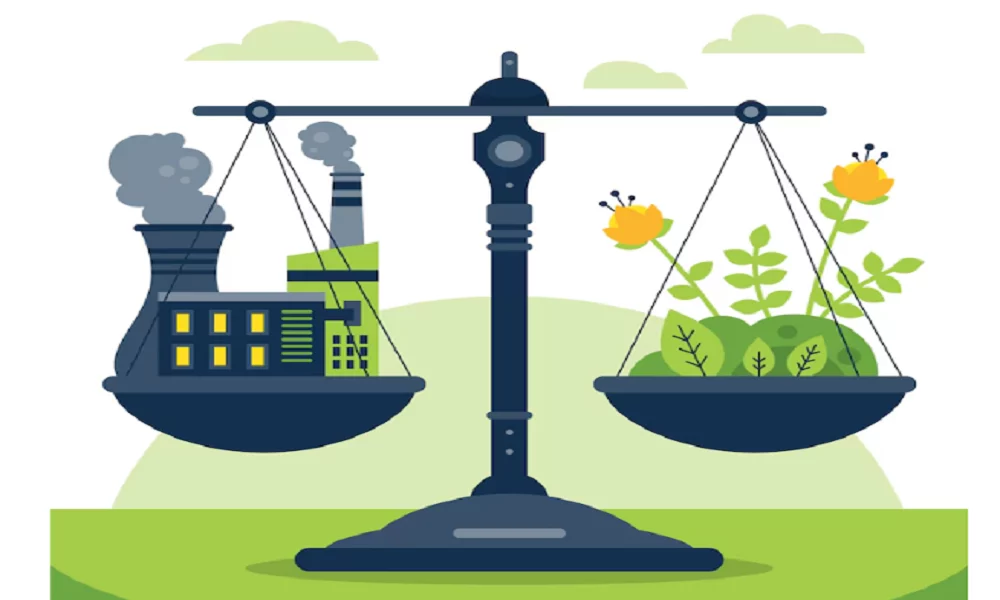
Over-expansion of the restrictions may lead to a paralysis of democratic dialogue and to abuse of the criminal law. But under-regulation could expose vulnerable populations to real harm. And the constitutional challenge, consequently, is not to end offensive speech; it is to accurately identify and contain harmful speech.
Conclusion
Toward Clarity and Constitutional Fidelity. The development of the Indian free speech jurisprudence from the emergence of Romesh Thappar[15] to Shreya Singhal[16] indicates an evolving judicial resolve to safeguard free speech. But the concept behind the regulation of hate speech is nascent, and enforcement will still vary. This uncertainty has now become all the more dramatic in this digital age. The rapidity, scale and permanence of online communication require a more coherent legal response. Going forward, three essential steps are necessary. Statutory definition of hate speech that is clear and based on the incitement standard. The consistency of judicial application of constitutional principles. Transparent regulations for digital intermediaries. Every democratic society should be an environment where dissent, satire, or even the thought of discomfort exists. But it also must guarantee that speech that comes into actual and demonstrable harm is subject to legitimate regulation. The problem is not with the choice between liberty and restraint, but with how one defines it, with precision, consistency, and constitutional integrity.
[1] Constitution of India, article 19(1)(a) and article 19(2).
[2] Romesh Thappar v State of Madras AIR 1950 SC 124.
[3] Shreya Singhal v Union of India (2015) 5 SCC 1 (SC).
[4] Shreya Singhal v Union of India (2015) 5 SCC 1 (SC).
[5] Ramji Lal Modi v State of Uttar Pradesh AIR 1957 SC 620.
[6] S Rangarajan v P Jagjivan Ram (1989) 2 SCC 574.
[7] Shreya Singhal v Union of India (2015) 5 SCC 1 (SC).
[8] Information Technology Act 2000, section 66A.
[9] Indian Penal Code 1860, sections 153A, 295A, 505.
[10] Pravasi Bhalai Sangathan v Union of India (2014) 11 SCC 477.
[11] Law Commission of India, Report No 267: Hate Speech (2017).
[12] Constitution of India, article 19(1)(a).
[13] Kedar Nath Singh v State of Bihar AIR 1962 SC 955.
[14] Information Technology Act 2000, section 79; Information Technology (Intermediary Guidelines and Digital Media Ethics Code) Rules 2021.
[15] Romesh Thappar v State of Madras AIR 1950 SC 124
[16] Shreya Singhal v Union of India (2015) 5 SCC 1 (SC).